The Gyrotonic Method is often celebrated for its adaptability, fluidity, and whole-body intelligence, but its impact on men’s health is talked about far less. In this article, SMT and Oncology Physical Therapist Fabiana Bernardes, and SMT and Pelvic Floor Physical Therapist, Valéria Mauriz share how the methods an be a powerful, supportive practice for men, including those navigating prostate cancer and its aftereffects. A special thank you to Fabiana and Valéria for allowing us to share with the community.
Supporting Men with Prostate Cancer Through the GYROTONIC® Method
by Fabiana Bernardes and Valéria Mauriz
Taking care of the male body often involves breaking the silence, particularly since men tend to find it more challenging to seek help, undergo regular check-ups and adopt healthier habits. These factors all contribute to men having a lower life expectancy than women. When we touch on the subject of prostate cancer, we encounter greater resistance as there are still taboos surrounding this type of care.
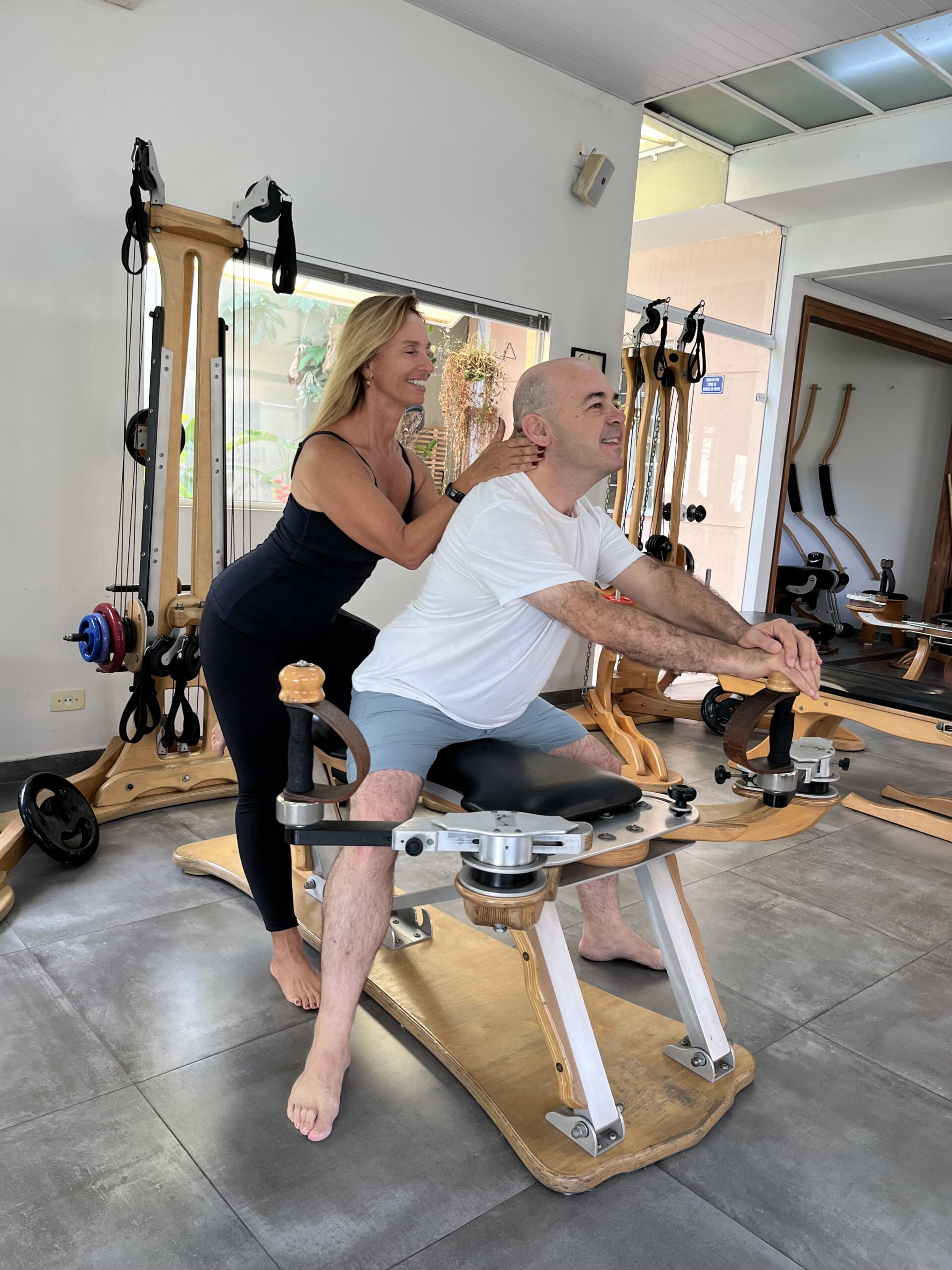
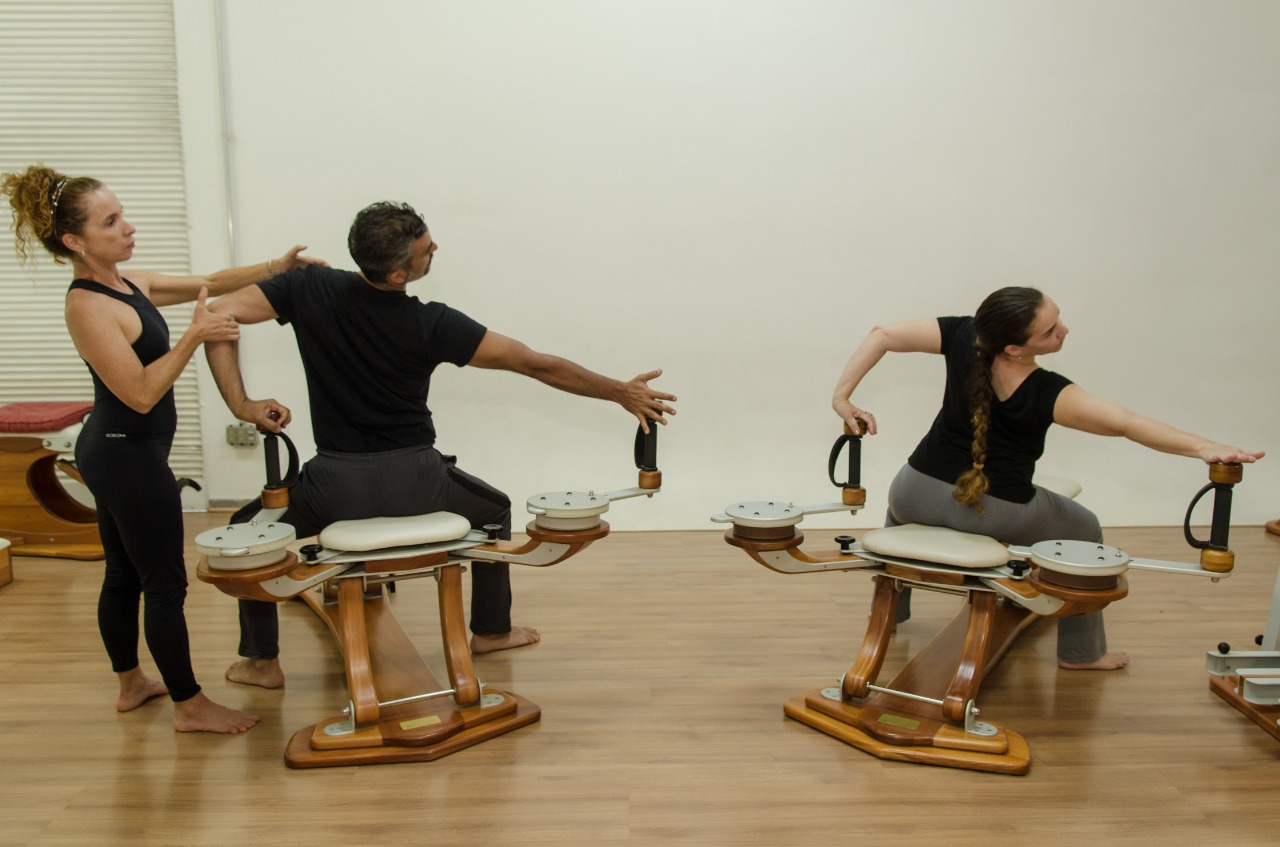
Fabiana works with a client on the Ultima Reveal. Image provided by Fabiana Bernardes.
Prostate cancer is the second most common malignant tumour in men. Because it is initially asymptomatic, many men are unable to obtain an early diagnosis, which requires routine doctor’s visits. Men only seek help when there are significant urogenital symptoms, by which time the condition may be more serious, requiring relevant surgical interventions and adjuvant treatment with chemotherapy, radiotherapy and hormone therapy. The good news is that it is a low-lethality tumour, meaning survival rates are optimistic. However, men need to adapt to a new reality.
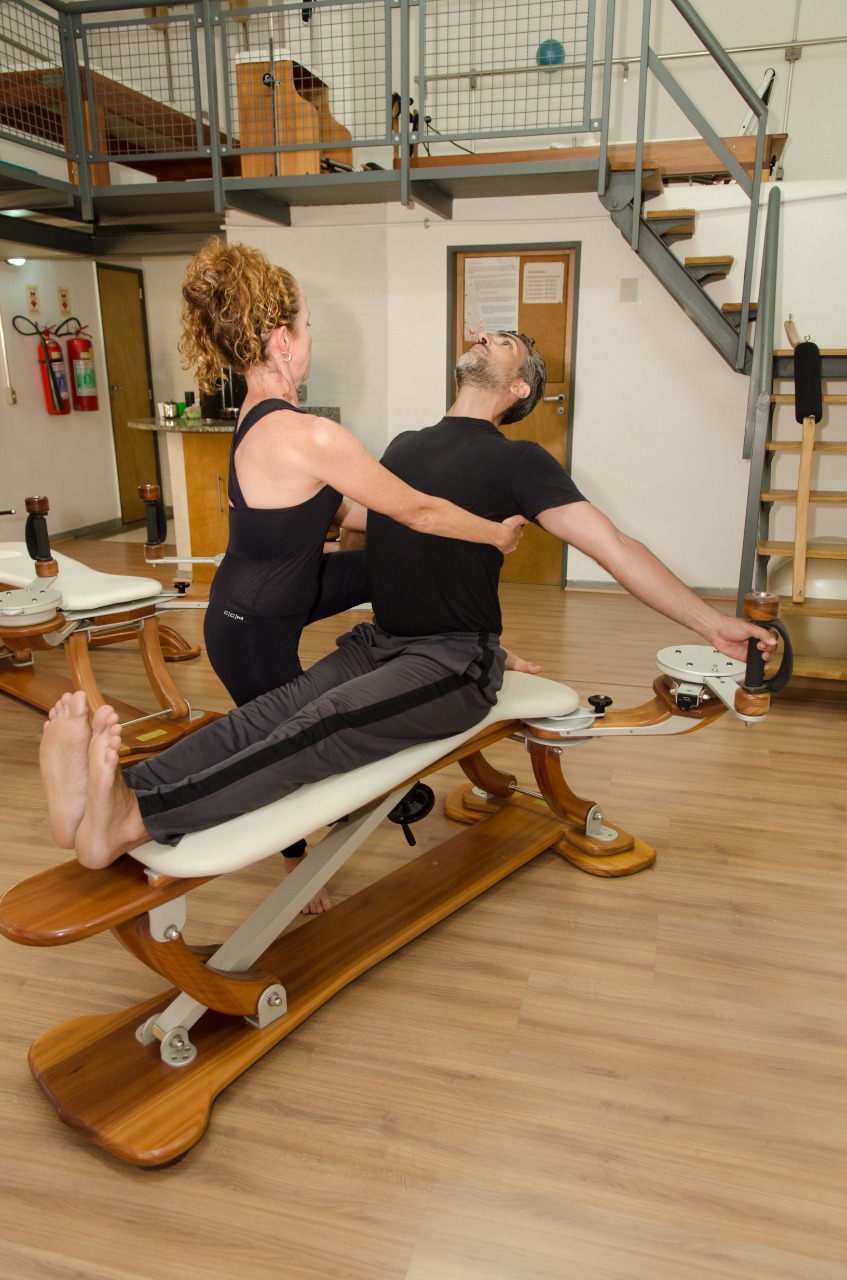
Valeria works with a client in the studio. Photo provided by Valeria Mauriz.
How can the GYROTONIC® Method help men?
Prevention is essential, so a change in habits is necessary. Physical activity has been shown to improve quality of life and promote health. The GYROTONIC® Method is ideal for this as it works the body through continuous, three-dimensional movements. This promotes tissue sliding, reducing stiffness and adhesions, and improves joint hydration. It also promotes a reduction in joint compression, achieving a balance between tone, mobility and control. These are all fundamental qualities for maintaining function. It also promotes neuroplasticity, allowing the reconnection of structures, and improves the circulatory system, which is essential for vascularising deep tissues and promoting healing processes.
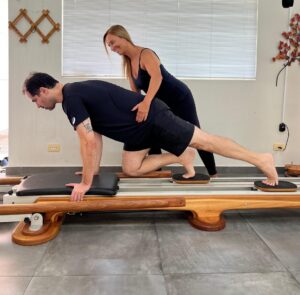
Fabiana works with a client; image provided by Fabiana Bernardes.
This occurs through circular, fluid movements coordinated with the breathing rhythm. Many male clients may attend a GYROTONIC® class complaining of lower back or chronic pelvic pain resulting from prostate cancer treatment. In such cases, it is important to use spirals, undulations and gentle spinal mobilisation with reduced range of motion to promote tissue hydration and decompression, which are essential for reducing stiffness in the lumbopelvic region. Another area in which the Gyrotonic Method can be beneficial is in re-educating the pelvic floor muscles, which have several functions including urinary and faecal continence, sexuality, posture and managing internal pressure. These functions are fundamental to an individual’s quality of life and socialisation. One issue that can affect men is the loss of potency due to a lack of blood supply to the pelvic region, which results in a lack of strength and function to maintain sexuality. Unlike women, where dysfunction may affect the deep layer muscles of the pelvic floor more, in men it will affect the superficial layer more, leading to urinary incontinence or urgency. This can also lead to greater sensitivity and tension in the region, making sitting uncomfortable.
In these cases, the following is suggested:
- Teach narrowing of the pelvis in the supine or dorsal decubitus position, along with supplying, using a pillow or foam roller to raise the pelvis.
- ‘Rocking the pelvis’ is important for mobility and increasing the blood supply. However, sitting may not be the most appropriate position. In this case, the strategy is to place a rolled-up towel under the ischial tuberosities to raise the pelvis and reduce friction between the scrotum and the seat.
- Breathing: The GYROTONIC® method involves coordinating breathing with movement. Breathing exercises can relieve stress and anxiety, reduce cortisol levels and improve the immune system and sense of well-being. The diaphragm muscle also works synergistically with the pelvic floor muscles. If there is pain, stiffness and tension in the lumbopelvic area, it may be best to start by releasing and stimulating breathing and the diaphragm muscle before stimulating mobility or strength in that region.
- Strength and tone: Do not be afraid to perform strength and toning exercises. Chemotherapy and/or radiotherapy, or hormone therapy, can cause fatigue and weaken bones, decreasing muscle mass and causing sarcopenia and/or osteoporosis. Due to the risk of fractures resulting from falls, balance work is also important.
- Add hip stabilisation to your session. Use the chest pelvic lift on the pulley tower with the lower straps for traction.
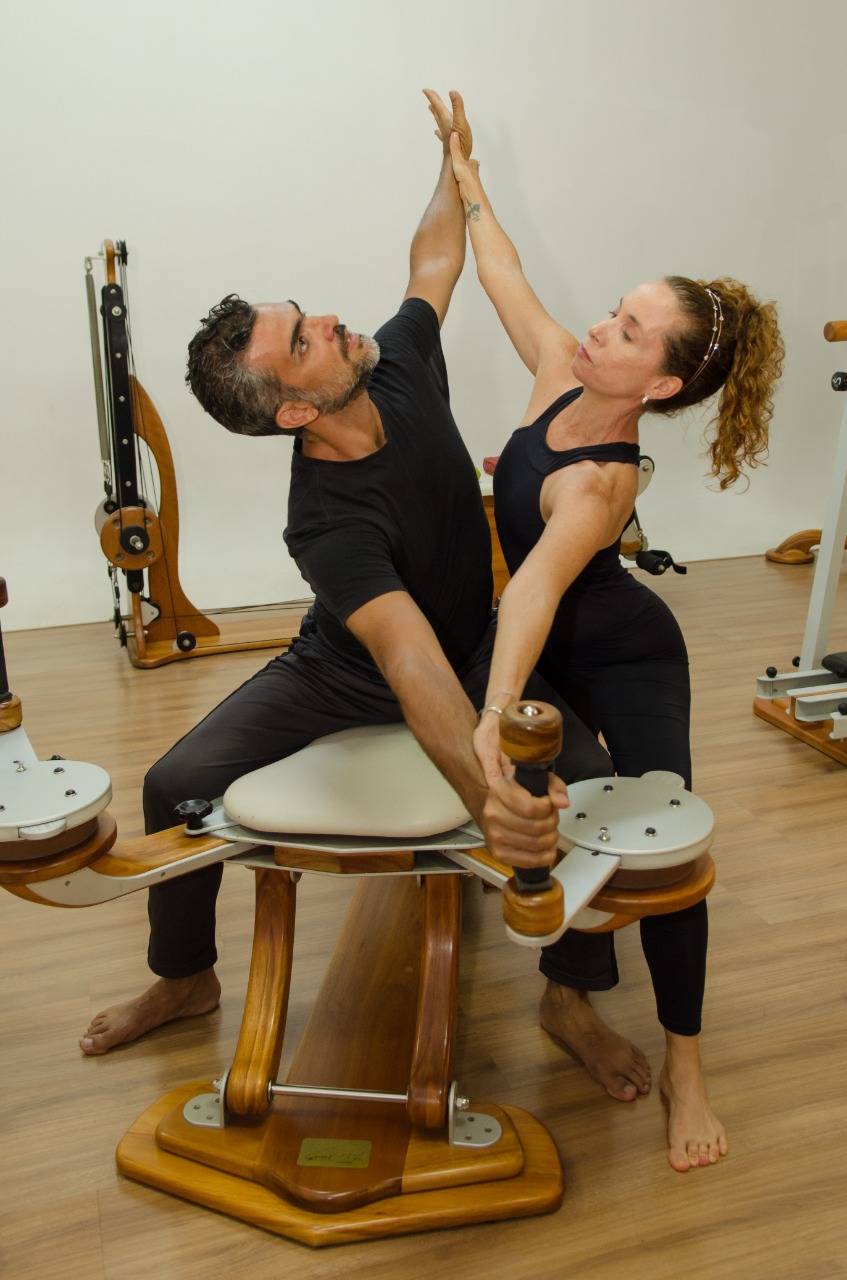
Valeria working with a client; image provided by Valeria Mauriz
In summary, an extremely important aspect of the GYROTONIC® method during prostate cancer recovery is restoring our clients’ confidence in their own bodies.
About the Co-Authors
Click here to read more about Fabiana Bernardes, SMT and see her upcoming course schedule. To learn more about her studio, visit Atelier do Movimento. To learn more about Valeria Mauriz and see her upcoming course schedule, click here. To learn more about her studio, visit GYROTONIC® M.A.R.
Want to read more? Take a look at these other inspiring stories from our community:
Revitalizing Hope: GYROTONIC® Applications for Breast Cancer
The Gyrotonic Method and Neuroplasticity
“Narrowing” According to Juliu Horvath