

At the heart of the GYROTONIC® and GYROKINESIS® Methods is a deep understanding that movement is more than exercise, it is communication with the body, the breath, the senses, and the nervous system. In this collaborative piece, Gyrotonic and Gyrokinesis Trainer Heather Kenneally MSOT, OTR/L and Gyrotonic and Gyrokinesis Trainer Jamien Cvjetnicanin, MOT, OTR/L explore how sensory awareness shapes our experience of movement, stress, regulation, and presence. Through studio observations, research, and practical application, they invite us to consider how attuning to sensation can help clients reconnect with themselves, cultivate calm, and experience greater integration and ease both in and beyond the studio. A big thank you to Heather and Jamien for allowing us to share with the community.
From Overwhelm to Presence
Whirling through the doors like a miniature tornado, everyone looks up from their Gyrotonic session when Phoebe arrives at the studio in a state of agitation. She loudly tells her trainer, Emily, about how overwhelmed she felt driving through traffic, how anxious her boss is making her, and how fed up she is with feeling achy from menopause. Emily decides to sit with Phoebe in a peaceful, quiet corner of the studio, facing away from other clients to help her focus and transition into the session. They begin with breath-focused “Awakening of the Senses” Gyrokinesis movement to begin to deepen with her body and come into the present moment. Next, a connected series focused on pushing and pulling against resistance to help calm her nervous system. How did Emily arrive at these choices? Read on!
Our Sensory Experience
Our sensory experience is the gateway through which we engage, interpret, and experience the world around us. It’s the entry point to our nervous system, and our senses precede the development of stories about what’s happening. Our senses are like snowflakes, each person’s perception of the world is uniquely their own. Our sensory experience shapes our perceptions, emotional responses and memories. It regulates our control of how alert or calm we feel, manages our stress levels, and it affects our ability to function and respond to our environment. (Sullivan & Fitzgibbon, 2018). As Gyrotonic instructors, we can harness our powerful sensory systems to support our clients and ourselves.
Deeply attuning to the sensory experience can help bring us into the moment, often leading to feeling present and grounded. And, mindfulness practices (like Gyrotonic movement) can lead to more sensory awareness, which heightens our state of calm. Research shows that in people with long-term mindfulness practices, the brain has a stronger inclination to spontaneously shift its attention toward sensory processes (Panitz et al, 2025). This can help deepen the mind-body connection and sense of integration and wholeness. This sensing body has a direct effect on how people experience their daily activities and relationships. When we live in our body and relish the sensations of our experience, we become less preoccupied with our to-do lists and thoughts and become present. We experience the world with direct access to the moment through our senses.
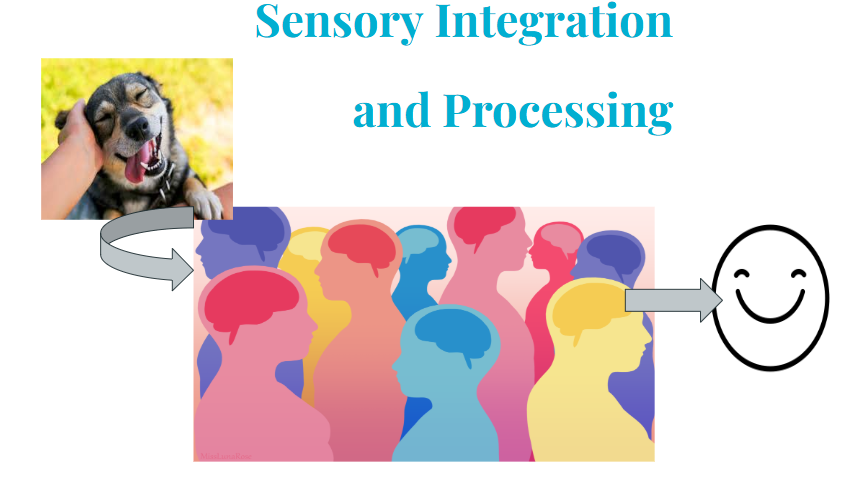
Sensory Integration and Processing
We integrate and respond to sensory information at the neural and behavioral levels through a multi-step process:
- Sensory Detection: The body receives input through the senses.
- Sensory Transmission: Nerve pathways send the sensory info to the brain for processing.
- Sensory Processing: The sensations get organized and classified to make sense and determine relevance and meaning.
- Integration and Modulation: The brain regulates responses, filtering out unnecessary input and adjusts its reactions to sensory stimuli.
- Motor or Behavioral Response: The individual then gives meaning to the stimulus and assimilates that information into a motor or behavioral response (Brown et al, 2019).
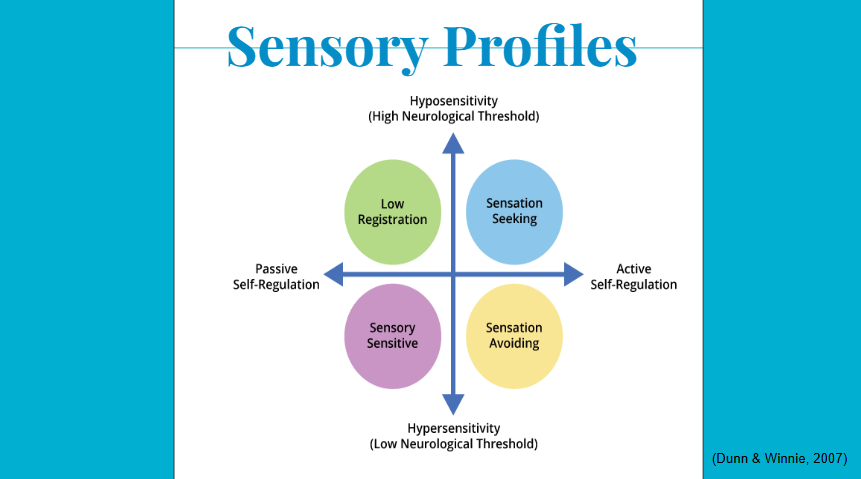
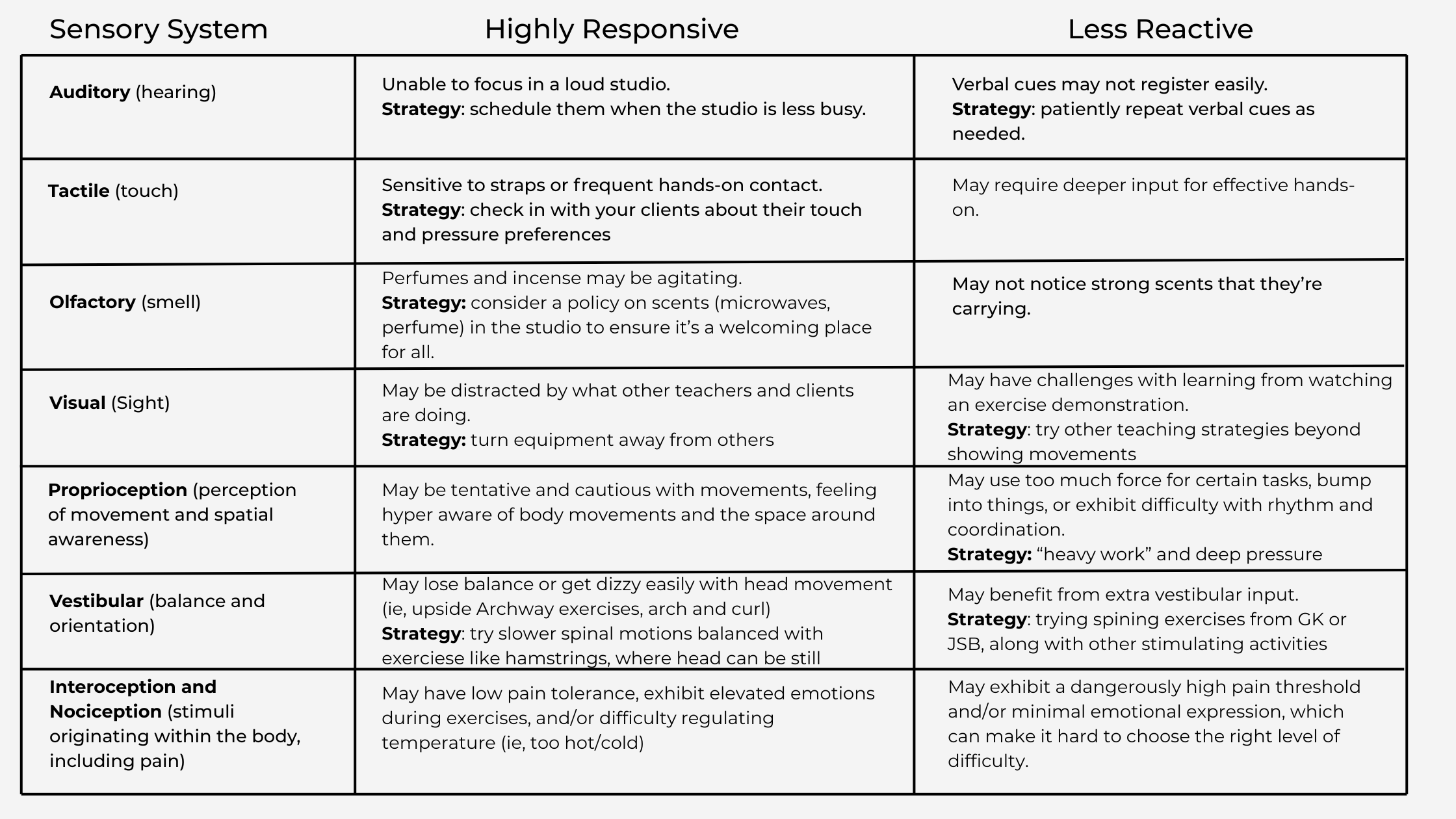
As practitioners, we can develop a “sensory lens” in order to evaluate how sensory processing preferences and differences influence a person’s participation in their sessions and in their daily life. A highly responsive sensory system reacts strongly or quickly to input, which sometimes leads to avoidance or overwhelm. While a less reactive system reacts slowly or less intensely, which can lead to seeking more input or appearing under-responsive. It’s important to remember that people usually have a variable combination of these styles, depending on the particular sensory systems involved and other internal factors (like emotions, pain levels, etc.) and external factors (like family stressors, having a really good day at work, etc.).
The following table briefly explores the sensory systems and how people at either end of the spectrum might respond to stimuli in a Gyrotonic context, along with a few strategies for optimizing their session experience. It is useful as we develop our sensory understanding to take into account our client’s sensory needs as an integral part of their session. Please note that the listed responses can also be caused by other client physical and psychological factors beyond the sensory system.
How it Relates Generally to Gyrotonic Movement
Gyrotonic movement helps stimulate and calm the nervous system through the use of breath, attention, resistance, arching and curling throughout the movement series. In occupational therapy, we use “heavy work” and deep pressure to regulate the sensory systems like the proprioceptive system, and stimulating/arousing activities that regulate the senses like the vestibular system (more details below).
In Gyrotonic movement, we can use the tower pulleys or our own body for resistance (known as “heavy work” in Occupational Therapy). We use our “hands-on” cues to connect to tactile sensations and deep pressure. We use verbal and visual cues for auditory and visual guidance of movements. We also use breath to engage and connect the client to their interoceptive sense of self and what they are feeling in the present moment.
Using the senses as a compass for ourselves and our clients can help us meet the client where they are. Establishing how they are presenting allows us a guide for how we can best support them by regulating exercises and awareness. Knowing we all have sensory preferences and differences and honoring them, can create a safe space for healing and change. It can be a wonderful tool to facilitate a regulating and inspired session for both the client and the practitioner.
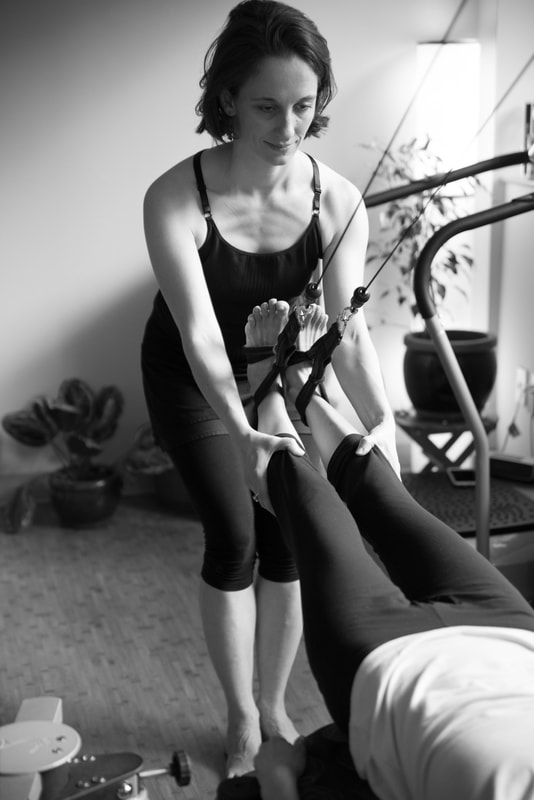
Jamien Cvjetnicanin works with a client.
Here are a few examples of ways to use the Gyrotonic Method with sensory awareness:
- Heavy work involves using muscular effort (i.e., pushing, pulling, lifting) to regulate the nervous system through active deep pressure input into the fascia, muscles, joints, and tendons, activating our proprioception. The weight/effort needs to be heavy enough to slow you down to give these body structures direct, strong feedback. A few Gyrotonic examples include: wrestling spiraling twists, all cat back series in the Gyrokinesis formats, using slightly heavier weights with upper and lower body series. This is helpful for low registration and sensation seekers by increasing sensory input. It’s also helpful for sensory sensitivities and sensory avoiders by helping to calm the nervous system.
- Deep pressure also influences the proprioceptive system and may have similar benefits to heavy work, depending on the situation. Gyrotonic movement examples include: Client using pressure of their own fingers during self-massage in the Awakening of the Senses, along with hands-on techniques for direct tactile experiences.
- Stimulating/arousing activities affect the vestibular system and can be especially helpful for low registration and sensation seekers. These exercises can also be used to increase the window of tolerance for people who are sensory sensitive or avoidant. Gyrotonic movement examples that may be helpful with this population include: taming the tiger, cardiovascular series, and moving through arch and curl series on the handle unit quickly, with corresponding breath and rhythm.
In conclusion, with a sensory lens, you’re assessing the client from the moment they enter the studio. From body language, gait and movement restrictions to emotions and behavioral responses, they share so much helpful information before you officially begin the session. Through this observation, we can meet clients in their current sensory state and help them feel regulated before moving into different sensory dynamics. Along with our clients, it’s important to understand, honor, and take care of your own sensory needs. This enables you to work with a landscape of sensory preferences without projecting your own sensory profile onto them. From this place of self-awareness, you can respect clients’ goals for themselves and offer them the self-agency to better understand what they actually want and need to thrive. And lastly, once safety and nervous system regulation have been established, you can, if they choose, collaborate with your client to help expand their sensory range and build resilience. This can have a big impact on their life both within and outside of the studio.
Opportunities to Explore Further
For a deeper learning and exploration of this topic, a weekend workshop is available, “Feel What Moves You”, using occupational therapy applications and Gyrotonic-informed movement to rediscover your sense of self. To learn ways to regulate the nervous system, refine observation, and explore the sensory profiles of self and clients with joy, curiosity, and mindfulness. Please contact Heather Kenneally for more information.
For additional information, including experiential activities, you can purchase our presentation from the Gyrotonic Rehabilitation Conference here.
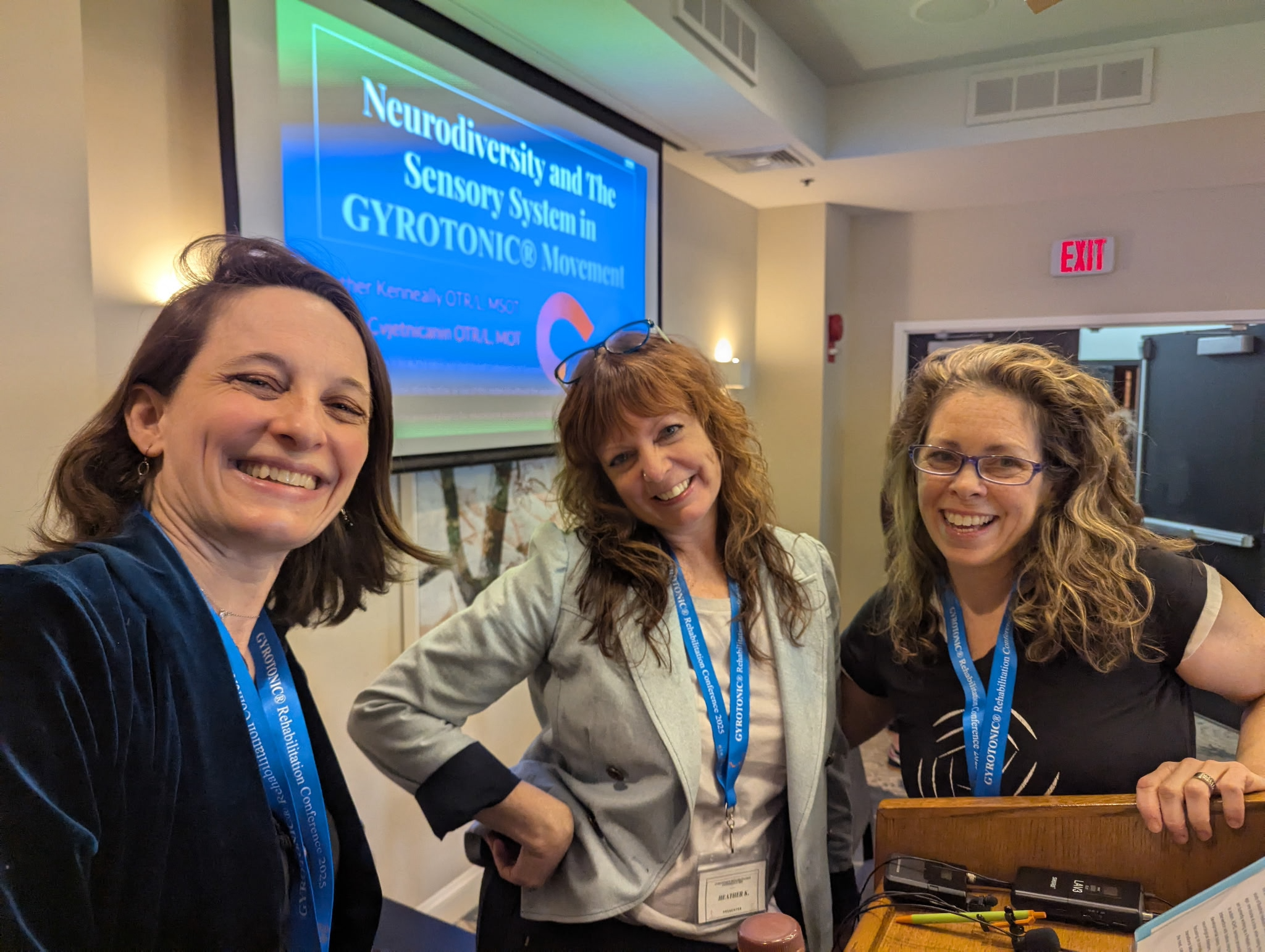
Heather & Jamien with Dr. Justine Bernard, DPT, Gyrotonic & Gyrokinesis Master Trainer
About the Co-Presenters
Heather Kenneally has over three decades of experience in the movement and healing arts and has been a Gyrotonic and Gyrokinesis Trainer for 29 years, studying under the tutelage of Gyrotonic founder Juliu Horvath and the late Master Trainer Leda Franklin. Heather has a BFA in Dance, a massage therapy degree specializing in Shiatsu and therapeutic massage and a Master of Science degree in Occupational Therapy. Heather has worked in outpatient rehabilitation and sensory clinics and currently serves as a school-based Pediatric Occupational Therapist in Kingston, NY, supporting over 75 K-4 students in developing sensory integration, gross, fine, and visual motor skills. Heather is also working in her private OT practice incorporating somatic work including movement, manual therapies, breath and meditation. Her ever-evolving career bridges the gap between movement, therapeutic care, medical practice, and joy. Her treatments are driven by discovering what sparks and lights up a person’s life and spirit.
Jamien Cvjetnicanin is in private practice as a somatic occupational therapist working at the interplay of mental and physical health for people living with chronic and complex conditions. As a former professional dancer, she also works with dancer well-being. Jamien is a long-time Pilates teacher (1999) and Gyrotonic and Gyrokinesis Trainer (2004) with training in several mind-body therapeutic dialog and facial bodywork techniques, including Tensegrity Medicine. She loves to partner with clients to create a personalized and trauma-informed synthesis of somatic modalities and OT, leading to greater ease and quality of engagement in their valued life activities. Additionally, Jamien is a research OT helping clients with neurological disorders through the Restorative Technologies Lab at the University of WA. For more information about her offerings and to contact her, visit Ease Therapy and Movement.
Heather Kenneally, MSOT, ORT/L, and Jamien Cvjetnicanin, MOT, OTR/L
Medical Disclaimer: All information on this blog post is intended for instruction and informational purposes only. The authors are not responsible for any harm or injury that may result. Significant injury risk is possible if you do not follow due diligence and seek suitable professional advice about your particular situation, condition, or injury. Information on this blog post is not a substitute for professional occupational therapy services. No guarantees of specific results are expressly made or implied on this blog post.
- O’Sullivan, J., & Fitzgibbon, C. (2018). Sensory Modulation Resource Manual. Sensory Modulation Brisbane.
- Panitz DY, Mendelsohn A, Cabral J, Berkovich-Ohana A. Long-term mindfulness meditation increases occurrence of sensory and attention brain states. Front Hum Neurosci. 2025 Jan 6;18:1482353. doi: 10.3389/fnhum.2024.1482353. PMID: 39834400; PMCID: PMC11743700.
- Brown, C., Stoffel, V., & Phillip Munoz, J. (2019). Occupational Therapy in Mental Health: A Vision for Participation (2nd ed.). F.A. Davis.
- Dunn, Winnie (2007), Dunn’s Four Quadrant Model of Sensory Processing. Accessed 2/7/25: https://connectability.ca/2020/07/14/four-patterns-of-sensory-processing/
Want to read more? Take a look at these other inspiring stories from our community:
Polyvagal Theory: Exploring the Nervous System’s Role in Movement & Connection
Welcoming Every Body: Creating Inclusive Spaces in Gyrotonic Studios
The Power of Connection: Bringing Nonviolent Communication (NVC) to the Gyrotonic Community